Blog

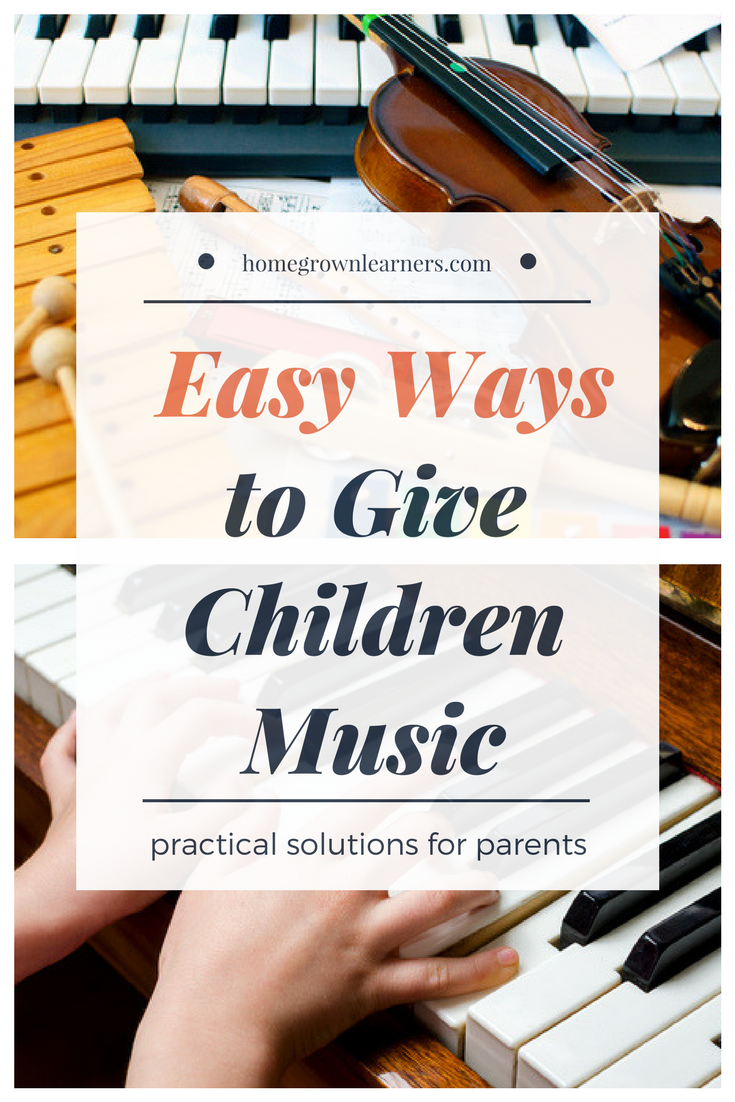
Easy Ways to Give Children Music

Music is a profound expression of our deepest emotions. It is one of God's greatest gifts of beauty to us.

Learning to appreciate music gives us a window into the world of the composer. 

Playing a musical instrument promotes discipline and improves academic abilities.

You know all of this - or else you wouldn't be reading this post. 

What you might not know is how to give your children a beautiful music education.

It's really very simple - with intentionality and commitment you can give your children the gift of music.
Why Children Need Music (and easy ways to give it to them)

I've learned a lot of tips and tricks in my years as an elementary music teacher, piano teacher, choir direction, and homeschool music curriculum developer... I pray this post will help you!

(I'm going to leave out private instrument lessons and choruses, orchestras, bands, etc... Those are obvious ways to give our kids music that I'm sure you know about!)

Let's not make this hard.


First, a book that never fails to inspire me - worth having on your shelf if you are committed to having musical kids: Raising Musical Kids by Patrick Kavanaugh.

Now, the easy ways to give your kids music.


Listen to Music With Your Children

Immerse your children in beautiful music every chance you get. It's the same principle as when you want to raise a reader - you need to provide books and model reading yourself. 

Provide your children with the opportunity to listen to quality music and listen to that music yourself.

A few simple ways to do this:

  • YouTube

YouTube is a great resource for music, but please don't let your child explore unsupervised. 

I've compiled a list of 10 Best YouTube Channels for Classical Music.

  • Spotify

This is a free streaming music service (you can pay a fee to eliminate the ads).  I have a playlist to get you started. You can also create playlists based on composers. A few suggestions might be to create a station for JS Bach, Wolfgang Amadeus Mozart, Johannes Brahms, or John Williams. These are just a smattering of great composers to get you started.

Just listen to this whenever you can - and don't make a big deal about it! 

  • Beethoven's Wig

These collections are so much fun. Classic pieces are played in their original form, and then they are given silly lyrics in another version. My kids always laughed themselves to death - and they STILL sing the lyrics to pieces like The Moonlight Sonata and one of Brahms' Hungarian Dances. Fun!

  • Amazon Music

With Amazon Prime Music you can listen to all kinds of wonderful music for an additional monthly fee. You can put the app on your phone for easy listening, too!

  • Apple Music

Since we are hard core music lovers in my house we subscribe to Apple Music. I can get virtually any piece on my iPhone or computer. I love this! Any time a piece is referenced anywhere I can look it up on Apple Music and play it for the kids. 
Easy Ways to Give Children Music


Take Your Children to See Live Concerts

Nothing compares to the magic of going to a concert. 

I know my son will never forget when I took him to see the Atlanta Symphony play - a concert pianist was there that evening playing the works of George Gershwin. This was the perfect concert for a pre-teen boy - lots of big piano playing - JAZZ nonetheless! 

Keep your eyes on your local paper and online for free events. Visit your local symphony's website and subscribe for updates. Is there a local college where you can attend performances economically? 

Many orchestras offer homeschool/education days. We do this each year in our area.

Love this guy -- using SQUILT Music's Meet the Orchestra cards while he attends a symphony concert!

The opportunities are out there - you just have to find them!


Give Your Children Simple Instruments

When children are very young, you can purchase them a simple set of rhythm instruments that will allow them to play and explore as they listen to music. 

As children get older they can self-teach themselves on what I like to call "starter" instruments:

  • Ukulele

  • Guitar

  • Recorder

  • Tin Whistle

You can purchase these instruments at music stores or online, with simple books your child can work through on their own. There are also a myriad of YouTube videos and courses online.

Let your child explore!

(This year in our homeschool I contacted someone who taught guitar and other instruments and asked him if he would put together a group Ukulele class -- we've had such fun!)

Easy Ways to Give Children Music

Take advantage of resources all around you. Many times musicians who teach independently or work in churches are willing to teach groups of children - especially homeschool kids! 


Create a Culture of Music with Books

Reading is integral to my kids' education - and learning about music is no exception. We have an area in our homeschool shelves dedicated to music.

Check out Best Books for Music Appreciation over at SQUILT Music - this is an excellent list to get you started!


Let ME Help You Teach Music Appreciation

My mission, through SQUILT Music Appreciation, is to make music easy, affordable, and enjoyable for families.

Our offerings:

  • Self-paced PDF volumes spanning all four eras of music

  • Meet the Instruments and Meet the Composers flashcards & curated videos

  • Extra resources to aid in teaching music

Last year I also decided to fulfill a dream of teaching music appreciation online to children - and SQUILT LIVE! was born.  I have been overwhelmed with the interest and success of this program.
 

Members of SQUILT LIVE! attend live online music appreciation lessons with ME twice a month, in addition to receiving a monthly listening calendar, a members-only volume, a weekly newsletter with teaching tips, and a discount on all SQUILT products. 

We have such fun! 

Parents like this program because children of multiple ages can participate at the same time... no prior knowledge is required - but somehow the children who already have musical knowledge are engaged, too. 


Do you include music in your homeschool?

Do you have any questions? Leave me a comment and I'm happy to help!


Debunking 5 Myths About Challenge A

We are finishing perhaps the most abundant, joyful, and beautiful year of my son's homeschool career. 

Yes, it's also been challenging, but isn't that the point?

This is the second time through Challenge A for this mama, so I feel like I know the drill now.

Challenge A is the springboard into the Logic stage of learning. It is the springboard into deeper inquiry, discipline, and connections. 

It is so, so rich.

To the parents all over the world stressing about preparing for Challenge A or wondering if their children are ready for Challenge A, I pray this will help you. I talk to a lot of upcoming A-ers and seem to hear the same fears over and over - they have turned into common myths.

Let's debunk those and then you'll feel better, ok?

Debunking 5 Myths About Challenge A

5 Myths About Challenge A


You won't be successful in Latin unless you've done a Latin curriculum the year before.

The Latin text used in Challenge A is Henle Latin.

A few facts about Henle (from our perspective):

  • It is challenging.

  • It looks daunting.

  • It will take a significant amount of time each day.

These things are all true. But guess what? 

Your child can DO IT. 

We had no prior Latin experience other than the CC memory work. We did a very gentle Latin book (Getting Started with Latin) during our Morning Time. This was sufficient preparation, and even if we wouldn't have done that it would have been ok.

I would, however, sincerely recommend a command of English grammar - preferably a year of Essentials before Challenge A. Knowing grammar is invaluable in the study of Latin!

From watching my own children in Challenge A, here are three tips to help your child succeed in Latin once they get to Challenge A:

  • Work through the exercises with your child - if you learn along with them you will be there for assistance and your child will feel like they aren't in it alone.

  • Write declensions each and every day - memory work is still very important! Start your Latin time with 10 minutes of writing declensions, conjugations, whatever you are studying at the moment.

  • Focus on vocabulary with Quizlet. Both of my children have found Quizlet to be an extremely helpful tool in Challenge A.

You might also want to read Preparing for Latin in Challenge A to put your fears at bay.


The literature selections are too easy. 

This one kinda drives me bonkers.

(I once had a mom attend a Challenge A info meeting who was quite indignant about how she wasn't going to bore her child to death with such easy literature. I found this to be a very short-sighted point of view.)

Literature Selections in Challenge A

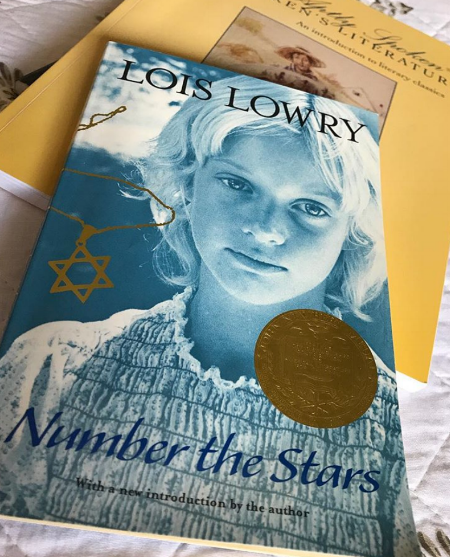
The books have been carefully chosen to provide a rich variety of interesting literature for our children.

The point of this strand in Challenge A isn't to have our children stretch their READING abilities. It is to develop their WRITING abilities, and specifically to help them generate WHAT to write. 

After going through the Lost Tools of Writing for many years now I can see the method to the madness if you will. Our children need books that can be written about and not struggled through - they need quality literature with characters facing difficult choices and situations. 

When you combine the selections with the discussion points in Words Aptly Spoken you will find the Challenge A year to be rich and rewarding. (I'm sad to see it end.)


There is NO WAY my child can do all of that work.

Repeat after me: YOU are the teacher.

You know what your child is capable of. You know if your child is giving it 100% of if they are being lazy. You know your family circumstances.

You can alter the workload without taking away from the integrity of Challenge A. In fact, you will find many ways to do this as the year progresses.

Just remember that your children are receiving such a RICH education. I like to tell myself, "Everything is gravy!".

The dynamics of my son's Challenge A group are such that the children spur each other on to excellence. They all strive to complete all of their work and have developed a tremendous amount of personal investment in their learning. 

Give your child the chance to SHINE - you may need to make some adjustments along the way, but you can because you are the teacher!


There is no HISTORY in Challenge A.

This is just false.

History is beautifully woven into nearly every strand in Challenge A.

The geography strand alone provides so much opportunity for interesting discussion about geopolitics and history. The cartography book has extensive readings on each part of the world that provide history.

The literature selections bring forth history.

Challenge A student learn history through their Latin studies. 

Our children discover that history is not an isolated subject. History occurs in and through all other subjects.


Challenge A takes all of the freedom and wonder out of our learning life.

Of all of the myths, this is one I  can understand. This was my greatest fear - losing the wonder in our learning life.

I have had to be intentional about structuring our days so that there is time left over for relaxation and hobbies. I have had to search for field trips and opportunities that coincide with our Challenge A studies.

Also in the front of my mind is the motto of Challenge A - Personal Investment Builds Ownership. The Challenge A year is a time for buckling down, working on organizational and time management skills, and experiencing the fruits of our labor.  This year is a time for cultivating other skills - and wonder may not be cultivated as much as it was in the past, but it doesn't have to be lost altogether.

 A few things that have helped my child keep the wonder alive:

  • Get up early each day so work is completed when we are fresh and happy - this leaves time in the mid and late afternoon for other things.

  • Don't give up a read-aloud time in your homeschool. We still read aloud each and every morning during breakfast - something NOT related to Challenge A.

  • Have a morning time that might consist of some Challenge A memory work, but also of other things like classical music, art, poetry, or whatever your child and you decide you want MORE of. If you have younger children, let your Challenge A student lead the morning time.

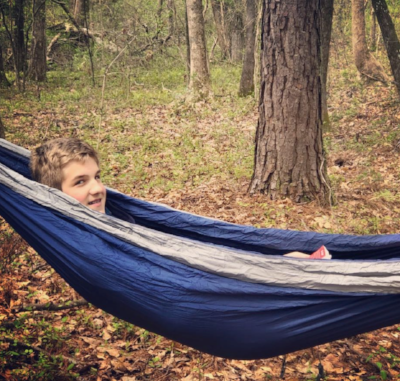
  • Vary work environments - study with a friend, go to the library, hang out and read in the hammock outside.

Keeping the Wonder Alive in Challenge A

Sitting at lunch today I looked at my son and said, "I can't believe this year is almost over, buddy. I would call Challenge A this year a rousing success, wouldn't you?"

His response? 

"Of course it was. Did you ever doubt it?"

There you go. Maybe those fears are just ours and not our student's. Maybe we need to follow their lead and just tackle the next big thing.

Challenge A is a year full of truth, beauty and goodness.  A few bumps in the road will occur, but it's how we respond to and learn from those bumps that will shape the year.


Do you have any particular fears about Challenge A?

Have you been through Challenge A and would like to offer suggestions?

Let me know in the comments below!