Blog

The Colorado Plateau - Part I: Learn About the Grand Canyon

We recently checked off an item near the top of our family bucket list.

People will tell you the feeling you have when you first see the Grand Canyon is indescribable. We heard things like “Pictures don’t do it justice.” and “It looks like you are standing in a painting.”

Yep. All of the above.

Truly - you really can’t understand until you have been there.

John Wesley Powell, one of the most famous explorers of the land west of the 100th meridian, named this area during his 1869 expedition.

The Colorado Plateau comprises a series of tablelands (plateaus or mesas) located within an immense basin surrounded by highlands. Stream valleys that are typically narrow and widely spaced dissect the region, as do larger valleys, including the most spectacular – the Grand Canyon. ~ The National Park Service

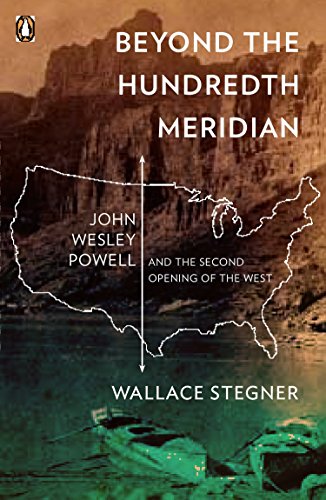
(Before we left for our trip I read Wallace Stegner’s Beyond the 100th Meridian - I highly recommend this to prepare yourself!)

These four states provide some of the most beautiful landscapes and rich learning opportunities of any concentrated area in the United States.

The Colorado Plateau - Part I: The Grand Canyon - itinerary and learning resources

Traveling the Colorado Plateau

When I was sharing pictures from our trip on Instagram, so many of my followers said - you MUST share your itinerary.

Our itinerary was simple because I didn’t have to plan a single thing.

We took a Trafalgar Tour - Colorful Trails of the Southwest. I knew we wanted to cover a lot of ground in approximately 8-10 days. I also knew that I didn’t want my husband to have to worry about a SINGLE THING - driving, deciding where to stay, what to eat, etc… After pricing some tours and then pricing our own airfare, vehicle rental, hotel prices, etc… a tour turned out to be a fabulous option.

Advantages of a tour experience:

  • you can truly RELAX - everything is decided for you

  • the itinerary keeps you MOVING - we did have some down time, but we were up and out early every morning and didn’t waste time

  • kids aren’t as free to complain or nag at each other because they are with other people

  • an EXPERT tour guide provides a wonderful educational experience - perfect for homeschoolers!

  • the best sights, hotels, restaurants, trails, picture spots, etc… are chosen for you

  • we met locals in several areas and felt we learned a lot more this way

  • you meet other people from all over the world and are enriched by spending a week with them


The first day we traveled from Phoenix to Scottsdale, to Sedona - and that evening found us at the Grand Canyon, staying at one of the lodges in the National Park.

We had some time to just STARE into the canyon. Truly - photos don’t do it justice.

The sun was beginning to set - which proved to be a perfect time to take pictures and watch the light and shadow play off of the rock formations. We never realized you could see so many colors of ROCK. The expansiveness of the canyon was breathtaking.

The wonders of the Grand Canyon cannot be adequately represented in symbols of speech, nor by speech itself. The resources of the graphic art are taxed beyond their powers in attempting to portray its features. Language and illustration combined must fail.
- John Wesley Powell

Visit the Grand Canyon - resources for learning with homeschoolers

We heard from “Canyon Tim” while we sat overlooking the canyon. He taught us about the geology of the canyon and the many different types of rock found in the Grand Canyon. This was a spectacular science lesson!

That night, at dinner, my kids had some great conversations with the people at our table about the age of the earth. I found myself being conflicted and wondering about the actual age of our earth - and my beliefs about Creationism.

A very kind man (the age of my children’s grandparents) from Tennessee gave my daughter what I thought was the best answer - he told her not to be too concerned about the age of it all, but instead to marvel at God’s creation and do everything in her power to love and protect that creation - and to share the good news of Christ. These wonders are placed in our path by God and we them our respect and awe.

I tend to agree. It is hard to argue with good science, but then again with God all things are possible. Some things are supposed to remain a mystery to us. I appreciated that we could have this discussion - and that my kids were even thinking about this. (Please don’t leave me a comment with your opinion about this - I don’t want to debate you here - I’m just happy to have had the discussion with my children.)

A couple of resources if you want to know more:

Learn about the Grand Canyon

The next morning we awoke early, ate a quick breakfast, and headed out to hike The Trail of Time. on our own. Again - more age of the canyon questions, but this time I felt like we could just take it all in and truly stand in awe at the events that had to happen over time for this incredible canyon to form.

Early morning in the Grand Canyon is so peaceful and beautiful. We saw a lot wildlife and were amazed by the lack of people on the trail.

We spent about two hours hiking, stopping for pictures, and just marveling at the beauty. Our guide had explained to us that the Grand Canyon tends to be a more passive national park - meaning people mostly LOOK at the scenery in the park. As we would come to Arches and Mesa Verde we would experience more active National Parks.

I’m sure we could have spent more time and done more activities at the Grand Canyon, but having a little less than 24 hours in the national park was perfect for us - especially because we had more to see and do in the next seven days!

Learn About the Grand Canyon

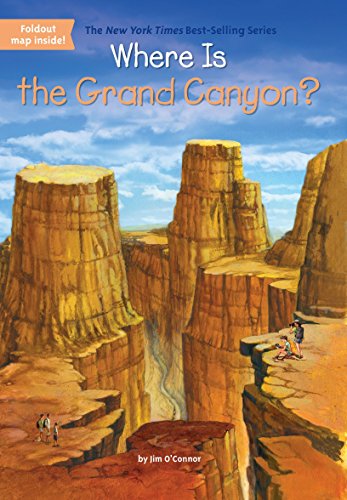
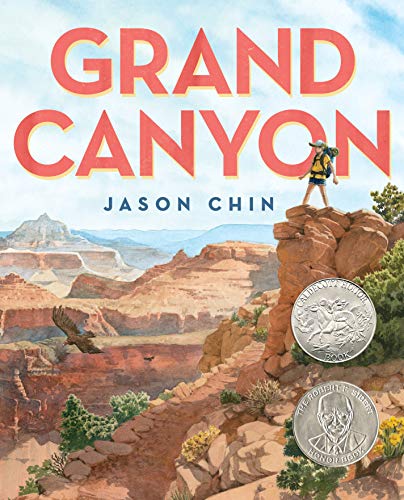
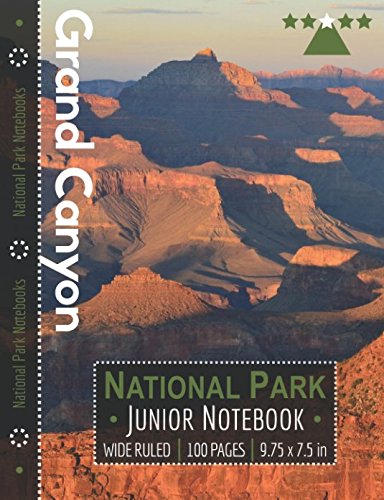
Learning Resources for The Grand Canyon

There was learning before, during - and will continue to be after - our visit to the Grand Canyon.

We learned more history on our trip than we ever could in a textbook. I count each and every one of our travel days a SCHOOL DAY. This is intentional learning, and I wish every child had the opportunity to learn about America in this way!

No matter what age my children have been, I always have the following strategy for before, during, and after our trips:

  • adult reading for mom and dad — so we can talk with each other and the kids about the area we’re visiting

  • books for the kids to read while on our trip

  • follow up read aloud books, puzzles, coloring, etc…

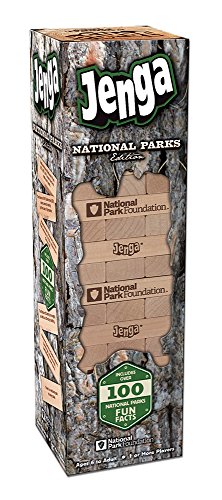
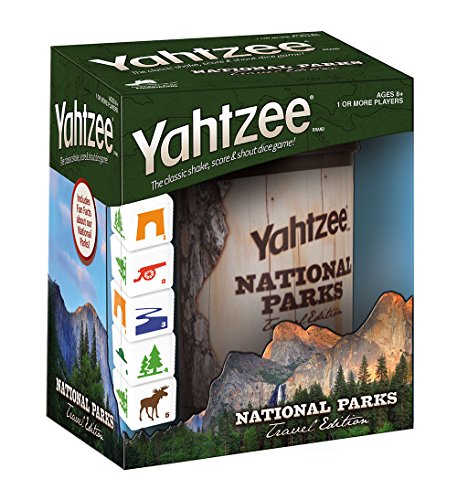
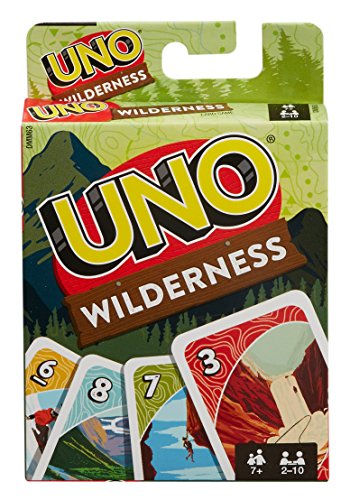
  • National Parks games are great — they have helped us learn so much!


Click here for Part II of our Colorado Plateau Adventures - Monument Valley and Mesa Verde National Park!

I’d love to know if you’ve traveled to the Grand Canyon, or if you are wanting to make a trip.

I hope these resources have been helpful to you. Leave me a comment below!

The Joy of Raising Children Who Ponder

I’m thrilled to share a guest post today from my friend, Janet Newberry. Janet’s book Education by Design, Not Default has challenged much of my thinking about education and energized me as we face our last few years of home education.

This summer, my community of homeschool moms is reading Janet’s book and meeting to discuss how we can further homeschool by design and not by default.

It’s an important question - one that I think every homeschool parent (and all parents, really) need to be asking themselves.

I encourage you to pick up a copy of Janet’s book, listen to her podcast (Brave Love), and be encouraged as you read her words here today!

Ahhhh—summer.  

It’s here!

Summer, at its finest, is an invitation to take a deep breath and move slowly into leisure—instead of striving to measure up in all the ways the traditional school year often requires.

Taking a deep breath is a good first step into summer.  Our bodies need the permission that fresh air offers us to shift into a slower gear.  

Leisure is a good second step.  Remember leisure?  Experiences like fishing or needlework…painting or gardening?  

Leisure is:

  • a great book—read in a hammock. 

  • writing a letter—to someone you love so much you wouldn’t consider simply emailing.

  •   a quiet, slow hike—or a walk on the beach.

Leisure offers an experience of good, true, and beautiful.  Our souls need leisure.  Susie Larson says, “What happens in our souls, happens in our cells.”

Our bodies need leisure, too.

Leisure is different than entertainment. 

Often entertainment tells us what to think—and, often we engage in entertainment when we’re too tired to think for ourselves.  Having to be right all day has worn us out.  

Leisure is an invitation to…ponder. 


Ponder - A Definition

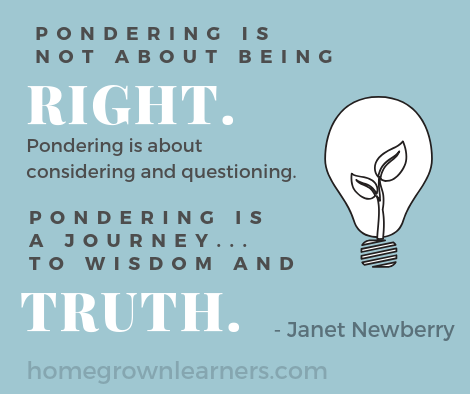
Pondering is not about being right.  Pondering is about considering and questioning.

Pondering is a journey…to wisdom and truth.  

One definition I found of the word “ponder” says “to weigh in the mind.”  Another says, “to consider something deeply and thoroughly; meditate.”

Pondering is a fairly new habit for me.  Before I pondered, I simply knew.  Or, I didn’t know—and I avoided, or pretended to know.  My shame story told me it wasn’t ok to be wrong.  I believed the lie that not knowing meant I didn’t fit in—or measure up.  Not being right was not being good enough.  Not being good enough was the edge of rejection for me. I was afraid to fail—so I was afraid to learn.

In my book, Education by Design, Not Default, I write this:

I don’t remember much of what I learned in college, but I do remember this:  One professor said, ‘Confusion precedes real learning.  If you’re not confused, you already know.’

Education today is not kind to confusion.  Confusion is to be avoided.  Confusion invites fear, and shame, and hiding.  Confusion attracts bullies.  Confusion often ends up with a label.

When education is not kind to confusion, school is not a safe place to learn.

Confusion is a kind of (good) struggle.  When we are not left alone in our confusion, persevering produces maturity.
— Janet Newberry (pp. 40-41)

I’m delighted to report that I find myself pondering quite a bit these days.  If I were to introduce myself at a “Perfectionist Anonymous” meeting, I might say, “Hi—I’m Janet.  I am recovering from always needing to be right.  I’m learning to live in the freedom of pondering.”

When my husband and I take walks together, he often hands me my phone—so I can voice record the ideas we discover when we ponder together.  Our walks—and our talks—are leisure.  Permission to ponder.

Pondering is a safe place—so it’s a good place to learn.

There is no fear in pondering.  Pondering is a like healing oil. It’s a maturing experience.  Truth sweeps away lies.  Learning grows in the fertile bed of confusion.  Wisdom settles in—and quiets our worry.

Childhood is designed as a season ripe for finding truth.  It is a time of growing up and finding our voice.  Confusion is the prelude to a fresh symphony—rather than an alarm that sounds because, “I don’t know.”


The Question

So, how do we raise children who linger—and enjoy the art of pondering? 

Perhaps it will require us to ponder the traditional aim of education—of recording scores of perfect performance…or something less.

Can I suggest a different aim?  I ask, because this is the summary of my 30+ years of research:

When we aim at the target of performance, relationships and maturity always suffer.  

When we aim at the target of supporting healthy relationships and maturity, performance goes off the charts.  

Will you ponder with me—the traditional performance target?  — and the potential of a different, transformational target?

What if we do not yet see education as it is designed to be experienced? What if we’ve lost sight of childhood—as it was designed to be experienced?

If there is real hope in aiming at a different target, we can cease looking for new ways to make a bull’s eye on the old target.  Performance isn’t evil; it truly is important.  Performance is simply a poor primary motive for children who are living in a season marked out in life as one of learning—not one of needing exemplary test scores.

I’m inviting you to ponder a new adventure in your own life—not just in the summer. And, I’m giving you permission to change your mind about the primary aim of education—in the hope of finding a better direction to lead our children.

The new invitation is to see two road signs on the path of childhood. As parents, we get to point out the fork in the road to our children. One sign points to a path that says, "Perform perfectly and life will work out perfectly." Another sign points to a different path—and reads, "Adventure awaits. Let’s discover freedom, together!”


Freedom - The Transformational Journey

Freedom is a transformational journey for our children—and, no one lives in freedom by themselves. Alone, we are all vulnerable to our blindspots--and the wisdom our own journey has yet to offer. 

The old aim in traditional education is bondage—to fear and shame. To get help, we need a label. To need help, there must be something wrong with us.

But God created Eve as a "help-mate." God says, "It's not good to be alone." We are wired to find deep satisfaction in being loved and loving others--not in our independent striving and perfection.

So, this is our challenge, in "all things READING" and "all things WRITING" and I predict "all things...." We have this destiny before us--to redeem childhood. 

We have the chance to help our children see the lies and find the truth—in a relationship with reading and math and science and history and art and nature and music. We get to help them know the truth about childhood, because knowing the truth about childhood will help them experience the truth about God...and about us...and about themselves.

Education by design is not a contest designed to see how well our children can remember vocabulary and make sense of pre-packaged questions on a comprehension test. Education is a feast—enjoyed with great books, like fine wine—designed to be delightful and delicious and deeply satisfying.

No one acquires a taste for feasting foods and fine wine on their own. The best affections are caught--not taught.

We get to be the ones that say to each child,

Follow me. I’ve got you, kid. I’ve seen this coming for a long time. I know this is a challenge and I know you’ve got a pocket full of doubts. It’s ok that everything’s not ok. It’s ok that you’re going to stumble sometimes. Me, too. It’s good to be me, here with you. Adventure and love and mystery and romance awaits. We’re not going to sit this one out.

God has something for you and for me inside the pages of this book.  God has a treasure for you to discover in math—and science.  There is wisdom to be found in history. God has a destiny for you in this hurting world—to make a difference for good. Let’s discover what it is—and trust Him, together.

My own heart has often considered Luke 2:19…with a whispered wow.  It’s the verse about Mary, after she’s watched the shepherds adore newborn Jesus in his baby bed manger —

“But Mary treasured up all these things and pondered them in her heart.” (Luke 2:19, NIV)

Confused?  Probably.  

Perfect comprehension?  It’s not possible.

Conflicted by chaos?  She had to be.

And delighted by sacred wonder?  Most definitely.

I like to imagine Father God, sitting on the edge of His Throne, peering over the edge of eternity…smiling at Mary.  “Oh, the joy of raising children who ponder!”


Practical Suggestions

Maybe you’re already pondering—

How do I apply these ideas in my homeschooling experiences with my own children?  I’m so glad you asked

1.   Instead of answering pre-packaged questions about a chapter (or a passage) you’re reading together in Literature, Bible, History, or Science, try this instead:  Divide a blank sheet of note-taking paper in half, from top to bottom to make two columns.  Label the first column “Considerations” and the second column “Questions.”  

After the reading, spend about 10 minutes letting each person (teacher and child/ren) write down the ideas they found to be noteworthy in the “Considerations” column.  These can be ideas that are new, ideas that offer a fresh perspective, something you’ve never thought of before, something you want to remember…and ponder…

Also, write down questions you thought of during the reading—in the “Questions” column.  These can be questions about what you didn’t clearly understand, questions about new learning you’re wondering about now that you’re discovering what’s in this text, questions you want to research because now you’re curious…

Everyone gets a turn to share their considerations and questions in discussion.  You can always return to the text to clarify—if someone’s considerations demonstrate a misunderstanding.  There’s no penalty for being wrong.  There’s simply an opportunity to ponder—and learn.

For older students, the lists can also be a part of brainstorming in the writing process—for creating paragraphs or essays.  For all of us, the lists can become a way of meditating on scripture, or keeping a prayer journal.

2.  Ask different kinds of questions after you’ve read with your child.  Instead of the typical  questions about plot and setting and theme, or knowledge level questions that can be graded easily on a multiple choice test and then forgotten, ask questions that invite pondering. 

There is a list of these kind of questions in my book (Education by Design, Not Default—How Brave Love Creates Fearless Learning )  on pp. 95-96—in chapter nine, “Traditions by Design.” Here are a few examples: 

  • “What is ________ believing to be true about himself right now?  How do you know?”

  • “What is ________ afraid of?  What is the evidence and the effect of fear in his own life?  What is the effect of his fear on others?”

  • “What is the impact and influence of love on _________?  Who/what is the source of love?  In what ways is love evident?”

Oh, the joy of raising children who ponder! 


When we offer our children an honest childhood, we offer the world trust-worthy adults. There is great hope.


Janet Newberry is an educational consultant and author of Education by Design, Not Default: How Brave Love Creates Fearless Learning which aspires to redeem childhood by offering tips to cultivate transformational experiences for our children.She is…

Janet Newberry is an educational consultant and author of Education by Design, Not Default: How Brave Love Creates Fearless Learning which aspires to redeem childhood by offering tips to cultivate transformational experiences for our children.

She is also the founder of John 15 Academy which supports the success of homeschooling families. Find out more on her website, and connect with her on Instagram and Facebook.

She and her husband are the hosts of the Brave Love podcast.


Janet’s book has been causing me to reevaluate many of my homeschooling goals and values.

I would love to hear from you in the comments about this… what is your reaction to Janet’s post?

And, will give your children an invitation to simply PONDER?